

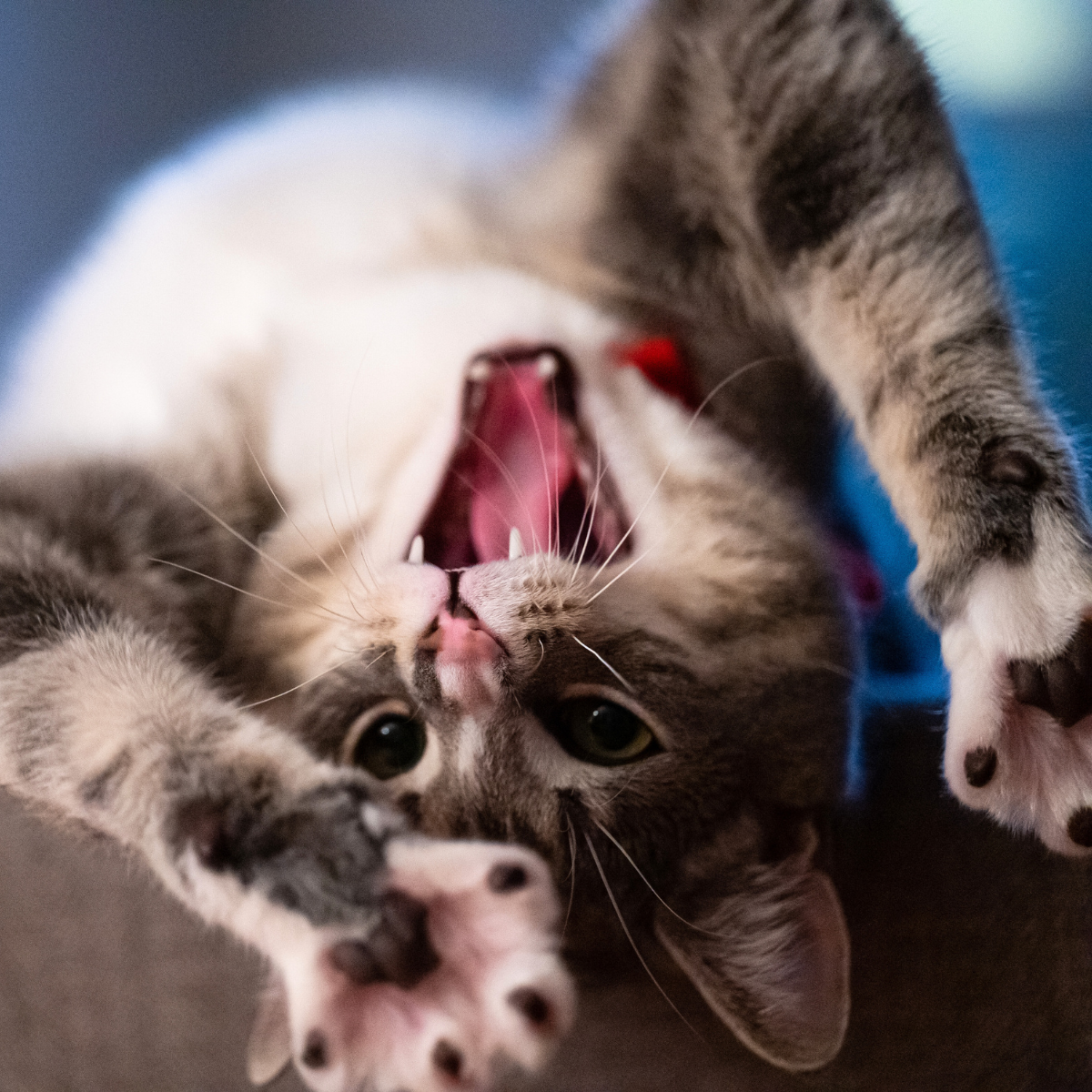
Petting-induced aggression is a common behavioural issue among cats, often surprising owners when a cat that initially enjoys affection suddenly reacts with a bite or scratch. Recognising the signs and understanding the causes can help you manage and improve your cat’s behaviour.
What Is Petting-Induced Aggression?
Petting-induced aggression occurs when a cat, after enjoying petting, suddenly becomes overstimulated and reacts aggressively. This can manifest as biting, scratching, or hissing. It’s important to note that this behaviour is not a sign of malice but rather a cat’s way of communicating that they’ve had enough.
Recognising the Warning Signs
Before an aggressive reaction, cats often display subtle cues indicating discomfort:
- Tensing of the body
- Tail twitching or lashing
- Flattened ears
- Restlessness or shifting position
- Mydriasis – dilated pupils
- Increased vocalisation
- Paw lifting
Being attentive to these signs can help you stop petting before the situation escalates.
What to Avoid
To prevent reinforcing aggressive behaviour:
- Do not punish your cat for reacting aggressively. Physical punishment can increase fear and worsen the behaviour.
- Avoid forcing interactions if your cat shows signs of wanting to be left alone.
- Refrain from prolonged petting in one spot, as repetitive touching can become irritating.
Strategies to Manage and Reduce Aggression
- Observe and Respect Boundaries: Pay attention to your cat’s body language and stop petting when they show signs of discomfort.
- Positive Reinforcement: After a petting session, offer a treat to create a positive association with being touched.
- Gradual Desensitisation: Slowly increase the duration of petting sessions over time, ensuring your cat remains comfortable.
- Provide Alternatives: Engage your cat in interactive play to expend energy and reduce the likelihood of aggressive behaviour during petting.
- Consult a Professional: If aggressive behaviour persists, consider seeking advice from a veterinarian or feline behaviorist.
Understanding Your Cat’s Personality
Just like people, cats have individual preferences and tolerances. Some cats enjoy extended petting sessions, while others prefer brief interactions. Recognising and respecting these differences is key to maintaining a positive relationship with your feline companion.
By being observant and responsive to your cat’s needs, you can foster a trusting and affectionate bond. Remember, patience and consistency are essential in managing petting-induced aggression.